Historic and older masonry properties require more than routine repairs. Brick, stone, mortar, and other masonry materials can deteriorate for different reasons, and the wrong repair approach can create additional problems. Professional masonry restoration should address the source of deterioration while preserving the property's appearance, character, and existing materials whenever practical.
For property owners in Passaic County, NJ, masonry restoration can include brick repair, mortar repointing, stone restoration, chimney repairs, masonry replacement, and moisture-related repairs. For historically significant properties, the work may also need to account for local preservation requirements and the character of the original construction.
Select Your Service Area
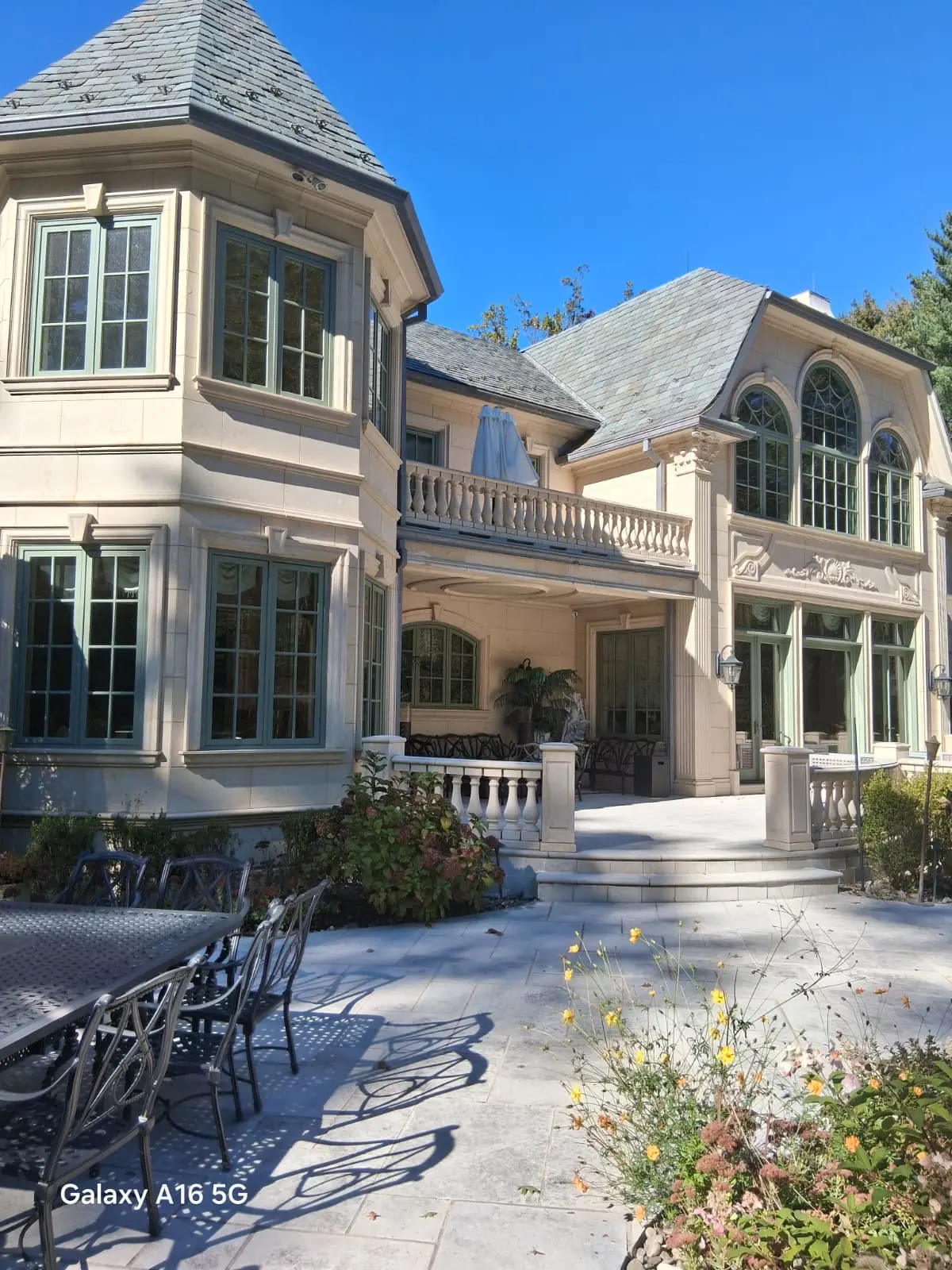
Historic masonry restoration starts with understanding the condition of the existing structure. Cracked bricks, deteriorated mortar joints, water intrusion, spalling, staining, and displaced masonry can all indicate underlying problems that should be addressed before cosmetic repairs are performed.
Depending on the property, masonry restoration may include:
The appropriate repair method depends on the building's age, construction, materials, exposure, and existing condition.
Repointing historic masonry is not simply a matter of filling damaged joints with new mortar. Older brick and stone buildings may have been constructed with mortar that has different strength, flexibility, and moisture characteristics from many modern products.
Using an overly hard or incompatible mortar can contribute to damage in some older masonry systems.
A careful restoration approach evaluates the existing masonry and mortar before selecting replacement materials.
The goal is to repair deteriorated joints while protecting the surrounding brick or stone and maintaining the appearance of the original construction.
Passaic County contains a variety of historic buildings, structures, sites, and districts. Some properties may be listed on state or national historic registers, while others may have local historic significance or additional preservation requirements.
Before making substantial exterior changes to an older or historically designated property, property owners should determine whether the building is subject to local preservation rules or other approval requirements.
This is especially important when work involves visible exterior masonry, architectural details, historic facades, or materials that contribute to a property's character.
Choosing a contractor for an older or historic property requires more than comparing estimates. Ask potential contractors about their experience with existing masonry and how they plan to diagnose the cause of deterioration.
A detailed proposal should clearly explain the recommended repairs, materials, preparation work, and scope of the project.
A masonry contractor works with materials such as brick, stone, concrete masonry, and mortar. Services can include construction, repair, repointing, restoration, replacement, and maintenance of masonry structures and surfaces.
Yes. Historic masonry work generally requires greater attention to existing materials, construction methods, appearance, and compatibility between old and new materials.
Masonry repointing involves removing deteriorated mortar from masonry joints and installing new mortar. Proper repointing can help restore the performance and weather resistance of masonry joints.
Property owners can check state and local historic-property records and contact the appropriate municipal preservation authority. A property may have local historic protections even when it is not listed on the National Register of Historic Places.
No. Depending on the severity and type of deterioration, some masonry can potentially be repaired or retained rather than completely replaced. The appropriate solution requires an evaluation of the existing material and the cause of the damage.
Yes. Water can contribute to mortar deterioration, freeze-thaw damage, staining, corrosion of embedded components, and other masonry problems. Identifying and correcting the source of moisture is often an important part of a durable repair.
Start by documenting visible damage and determining whether the property has historic-designation requirements. A qualified masonry professional can then evaluate the condition, identify likely causes of deterioration, and recommend appropriate repair methods.
Professional masonry restoration addresses the source of deterioration while preserving your property's character.