Finding the right masonry contractor in Bergen County, NJ means looking beyond price. Quality masonry work should address the condition of the existing structure, use appropriate materials, and provide a finished result that performs well in New Jersey's changing weather conditions.
Professional masonry services can include brick repair, stonework, repointing, masonry restoration, chimney work, retaining walls, and other exterior masonry projects. For older or historically significant buildings, the repair approach should also consider the original materials and architectural character.
Select Your Service Area
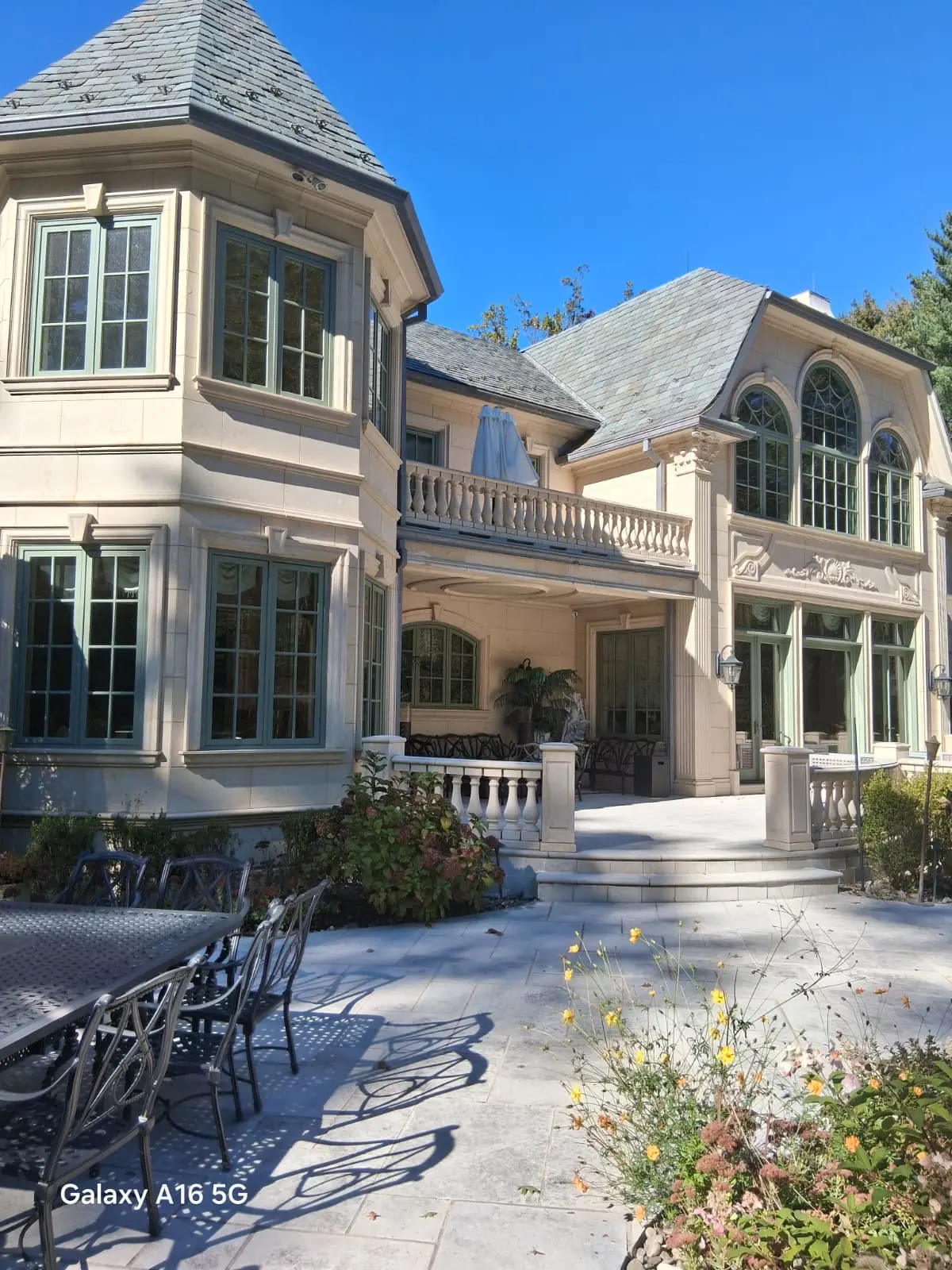
Masonry problems are often more than cosmetic. Cracked brick, deteriorated mortar, loose stone, water infiltration, spalling, and damaged joints can allow moisture to enter the building envelope and contribute to further deterioration.
A proper masonry assessment should identify visible damage and investigate what caused it. Depending on the property, recommended work may include:
The right solution depends on the type of masonry, age of the structure, extent of deterioration, exposure, and previous repairs.
Brick and stone should not always be repaired in the same way. Different materials have different physical characteristics, and replacement materials should be selected with the existing construction in mind.
Different materials have unique physical characteristics requiring custom repair approaches tailored to the existing structure.
Involves removing deteriorated mortar from joints and installing new mortar. Compatibility is vital on older buildings to avoid material conflict.
For significant restoration projects, documenting existing conditions before work begins helps establish a clear, structured repair strategy.
Bergen County has a strong historic-preservation infrastructure, including county preservation resources and a Historic Preservation Advisory Board, along with trust fund support programs.
The New Jersey Historic Preservation Office maintains listings of properties and historic districts that have received formal state or national historic-register actions. Local designations may carry extra requirements.
If a masonry project involves a historic property, verify the property's designation and applicable municipal requirements before beginning exterior alterations.
Before hiring a contractor, ask for a clearly defined scope of work and practical answers regarding deterioration causes, repair feasibility, mortar selection, protection measures, and permits.
A detailed proposal makes it easier to compare contractors based on actual recommended work rather than price alone.
Masonry contractors may provide brick and stone repair, repointing, restoration, chimney work, masonry construction, facade repairs, and other masonry-related services.
Common warning signs include cracked or loose bricks, crumbling mortar, open joints, spalling surfaces, water intrusion, leaning masonry, or areas that have visibly shifted.
Repointing is the process of removing deteriorated mortar from masonry joints and replacing it with new mortar. Properly specified repointing can help protect masonry from weather and moisture penetration.
Yes. Historic restoration typically places greater emphasis on preserving original materials, matching existing construction, and selecting repair methods that are compatible with the historic masonry.
There is no single inspection interval that applies to every property. Older buildings, exposed masonry, chimneys, and structures with previous water problems may warrant more frequent visual inspections.
Sometimes. The appropriate solution depends on why the masonry cracked, how extensive the damage is, and whether the affected material remains structurally sound.
Yes. Bergen County provides historic preservation resources, including programs supporting eligible preservation, stabilization, rehabilitation, and restoration projects.
The source of water should generally be investigated first. Repairing damaged masonry without addressing an active moisture source may allow deterioration to return.
Well-planned masonry maintenance and professional restoration solve underlying problems instead of simply covering visible defects.