How Much Does Bathroom Tile Installation Cost in New Jersey?
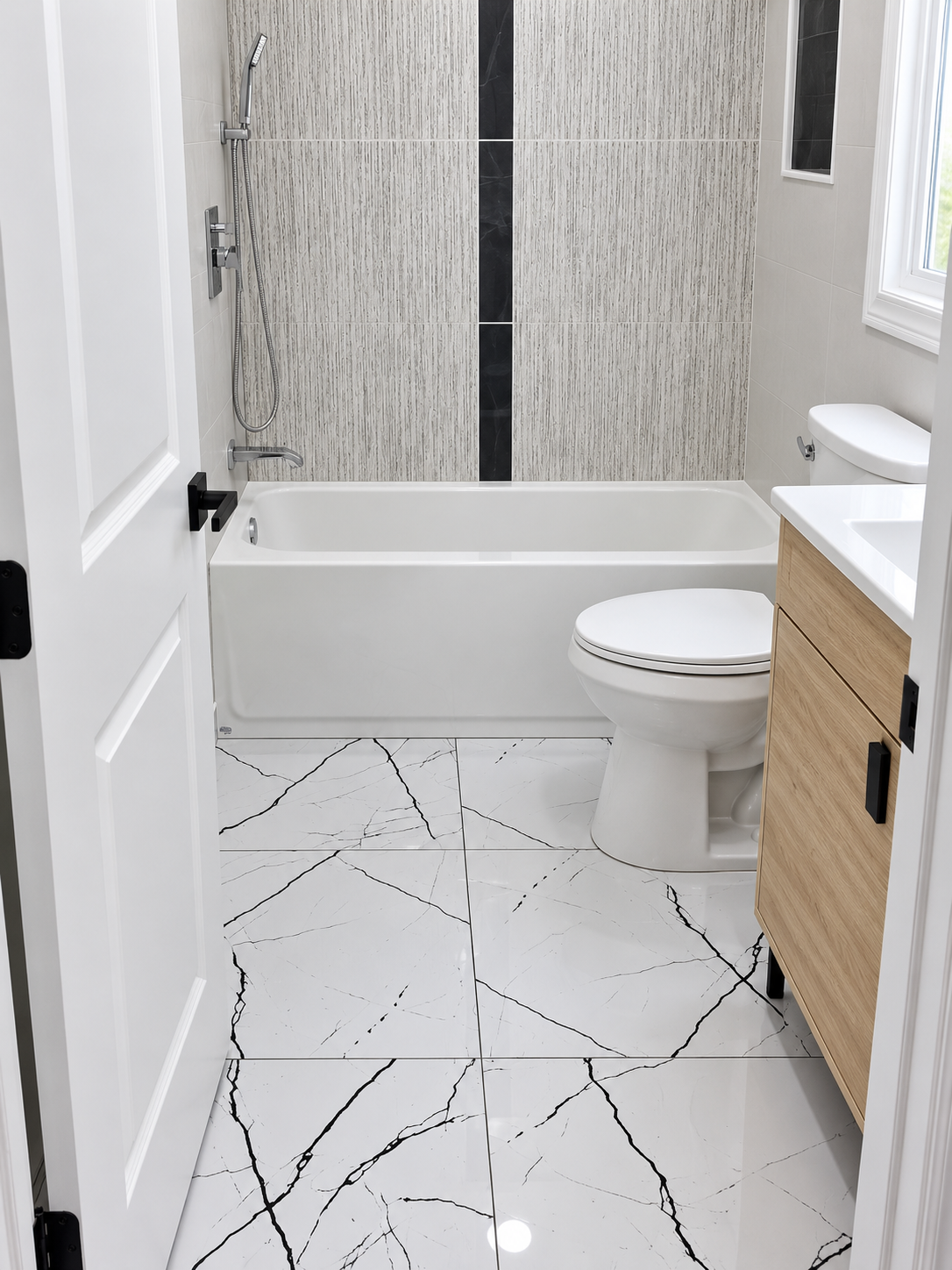
The average bathroom tile installation cost in New Jersey depends on the tile material, bathroom size, labor, surface preparation, and installation complexity. As a general budgeting guide, homeowners can expect approximately $10–$25 per square foot for standard bathroom tile installation, although premium materials, custom shower work, demolition, and waterproofing can increase the total.
Whether you are updating a small bathroom in Passaic County or renovating a larger master bathroom in Bergen, Morris, or Essex County, understanding these costs helps you plan your project and avoid unexpected expenses.
This guide explains typical tile installation prices, material choices, labor costs, and the factors that influence your final estimate. All figures below are illustrative planning ranges, not guaranteed contractor quotes.
Table of Contents
- Average Bathroom Tile Installation Cost in NJ
- Bathroom Tile Prices by Material
- Labor Costs and Installation Factors
- Shower and Bathroom Floor Tile Costs
- What Affects Tile Installation Pricing?
- How to Save Money on Bathroom Tile Installation
- Why Professional Tile Installation Matters
- Frequently Asked Questions
- Why Choose Tiles and Stones NJ?
- Conclusion
Average Bathroom Tile Installation Cost in New Jersey
Quick answer: Bathroom tile installation in New Jersey typically costs around $10–$25 per square foot for standard projects, depending on materials, labor, and preparation. Custom showers, premium natural stone, intricate patterns, and waterproofing requirements can increase the overall investment.
For a clearer picture, consider these approximate project budgets:
| Bathroom tile project | Estimated budget |
|---|---|
| Small bathroom floor (40–50 sq. ft.) | $500–$1,250 |
| Medium bathroom floor (50–80 sq. ft.) | $600–$2,000 |
| Shower wall and floor tiling | $2,500–$5,500 |
| Full bathroom tile installation | $3,500–$7,500 |
These are illustrative budgeting ranges. Actual costs depend on project scope, tile selection, demolition, substrate condition, and waterproofing requirements. A simple floor installation over a properly prepared surface generally costs less than a complete shower renovation involving waterproofing, niches, benches, and detailed cuts.
Bathroom Tile Prices by Material
The type of tile you select has a major influence on your renovation budget. The following are approximate material-only planning ranges; prices vary by supplier, product, and availability.
| Tile material | Typical material cost per sq. ft. | Key characteristics |
|---|---|---|
| Ceramic | $2–$8 | Affordable and easy to maintain |
| Porcelain | $3–$15 | Dense, durable, and moisture-resistant |
| Natural stone | $8–$50+ | Premium appearance and maintenance needs |
| Glass mosaic | $10–$40 | Decorative, often used for accents |
| Designer or artisan tile | $15–$60+ | Distinctive finishes and patterns |
Which Tile Is Best for a Bathroom?
- Ceramic tile: A practical choice for bathroom walls and many residential floors.
- Porcelain tile: A popular option for shower walls and floors because of its low water absorption.
- Natural stone: Adds an upscale appearance but may require sealing and specialized maintenance.
- Mosaic tile: Useful for shower floors, decorative borders, and niches.
For wet areas, choose products with appropriate slip resistance and follow the manufacturer's installation and maintenance recommendations.
Bathroom Tile Labor Costs in New Jersey
Labor is another major part of bathroom tile installation pricing. The complexity of the work often matters more than the bathroom's square footage. Typical labor-only budgeting ranges can vary from approximately $8–$15 per square foot for straightforward installations to $15–$25 or more for detailed patterns and specialized work.
Labor costs may increase when a project involves:
- Removing old flooring or wall tiles.
- Leveling uneven floors.
- Installing cement backer board.
- Waterproofing shower walls and floors.
- Cutting around toilets, drains, and plumbing fixtures.
- Installing large-format tiles.
- Creating herringbone, diagonal, or mosaic patterns.
Shower Tile vs. Bathroom Floor Tile: What Costs More?
Shower tile installation often costs more per square foot than straightforward bathroom flooring because it requires additional waterproofing, careful detailing, and precise cutting.
| Project type | Typical cost consideration |
|---|---|
| Bathroom floor | Depends on tile, floor preparation, and layout |
| Shower walls | Waterproofing, corners, niches, and plumbing openings |
| Shower floor | Drain slope, smaller tiles, and detailed cuts |
| Full bathroom | Combines several installation requirements |
Important: Tile and grout are not substitutes for a waterproofing system. Shower assemblies need an appropriate waterproofing method beneath the finished tile surface.
What Factors Increase Bathroom Tile Installation Costs?
Several conditions can change your final estimate:
- Bathroom condition: Damaged subfloors, deteriorated walls, or existing moisture problems require additional preparation.
- Tile size: Large-format tiles need careful handling and a suitably flat substrate.
- Installation pattern: Herringbone, chevron, and intricate mosaics require more cutting and labor.
- Waterproofing: Shower areas need properly installed waterproofing systems.
- Demolition: Removing existing tile and disposing of debris adds expenses.
- Project accessibility: Small bathrooms and complicated layouts can require more detailed work.
How to Save Money on Bathroom Tile Installation
You do not need to compromise on quality to manage your renovation budget.
- Select durable ceramic or porcelain tiles that fit your budget.
- Use decorative tiles as accents instead of covering every surface.
- Choose straightforward layouts when possible.
- Purchase approximately 10% extra tile for ordinary cutting waste, adjusting the quantity for complex patterns.
- Address plumbing leaks and moisture problems before installation.
- Request an itemized estimate covering preparation, materials, waterproofing, and labor.
Why Professional Tile Installation Matters
Professional tile installation helps ensure that surfaces are properly prepared, tiles are aligned, grout joints are consistent, and wet areas receive appropriate waterproofing.
Poor installation can lead to cracked tiles, uneven surfaces, loose grout, water infiltration, and expensive repairs. An experienced tile installer should explain the substrate preparation, waterproofing approach, grout selection, and installation method before work begins.
Frequently Asked Questions
1. How much does it cost to tile a small bathroom in New Jersey?
Tiling a small bathroom floor of approximately 40–50 square feet may cost around $500–$1,250 as an initial planning estimate. The actual price depends on tile selection, labor, demolition, floor preparation, and installation complexity. Shower walls or additional bathroom surfaces will increase the overall project cost.
2. How much does bathroom tile installation cost per square foot in NJ?
Standard bathroom tile installation can range from approximately $10–$25 per square foot, depending on materials and project requirements. Premium porcelain, natural stone, custom patterns, and shower waterproofing may increase the price. Confirm whether a contractor's estimate includes labor, tile, preparation, and installation materials.
3. Is porcelain or ceramic tile better for bathrooms?
Both are suitable bathroom options when selected and installed correctly. Ceramic is generally more affordable and works well on many bathroom walls and floors. Porcelain is denser and has lower water absorption, making it a popular choice for wet environments. The best option depends on durability, appearance, budget, and slip resistance.
4. How long does bathroom tile installation take?
A straightforward bathroom floor installation may take a few days, while a complete bathroom or custom shower project can take one to two weeks or longer. Demolition, substrate repairs, waterproofing, tile layout, grout curing, and project complexity all influence the schedule.
5. Does bathroom tile installation include waterproofing?
Not necessarily. Standard floor tiling and shower waterproofing are different parts of a project. Shower walls and floors need a properly designed waterproofing system beneath the tile. Ask your contractor whether waterproof membranes, shower pans, drainage connections, and related preparation are included in the estimate.
6. How much extra tile should I purchase?
For a straightforward layout, purchasing approximately 10% extra tile is a common recommendation. Intricate patterns, diagonal layouts, and unusual room shapes may require additional material. Keeping spare tiles is also useful for future repairs if a tile becomes damaged.
Why Choose Tiles and Stones NJ for Bathroom Tile Installation?
Choosing the right tile professional can make a significant difference in the appearance and durability of your bathroom renovation. Tiles and Stones NJ provides tile-related services for homeowners looking to improve their residential spaces. Whether you are considering porcelain bathroom flooring, decorative shower walls, natural stone finishes, or a complete tile upgrade, careful material selection and proper installation are essential.
The company has a dedicated tile services page for Wayne, NJ, and its stated service areas include Passaic, Bergen, Morris, and Essex counties. Explore the available services and contact Tiles and Stones NJ to discuss your bathroom tile requirements and request a project estimate.
Conclusion
Bathroom tile installation costs in New Jersey depend on the tile material, labor, bathroom dimensions, waterproofing, and preparation requirements. Standard installations may fit a modest budget, while custom showers and premium materials require a larger investment.
Before beginning your renovation, compare material options, understand the installation process, and request a detailed written estimate. If you are planning a bathroom upgrade in Passaic, Bergen, Morris, or Essex County, explore Tiles and Stones NJ's tile installation services to discuss your project.